Facial Asymmetries & Facial Palsy
Individual support for facial asymmetries and after facial palsy.
Facial asymmetries can arise after facial palsy, after a procedure or for other reasons. I look at the mobility of both halves of the face and put together targeted FACE exercises and selected manual techniques individually. After medical assessment, the support can complement medical or therapeutic treatment.
- A personal analysis of mobility and visible asymmetries
- Individually selected FACE exercises
- Selected manual techniques as a targeted complement
Important: The FACE Method® and the manual support do not replace medical or therapeutic treatment. They are intended solely as a complement. We make no healing promises and no statements about any particular course or outcome.
What this is about
What is facial palsy?
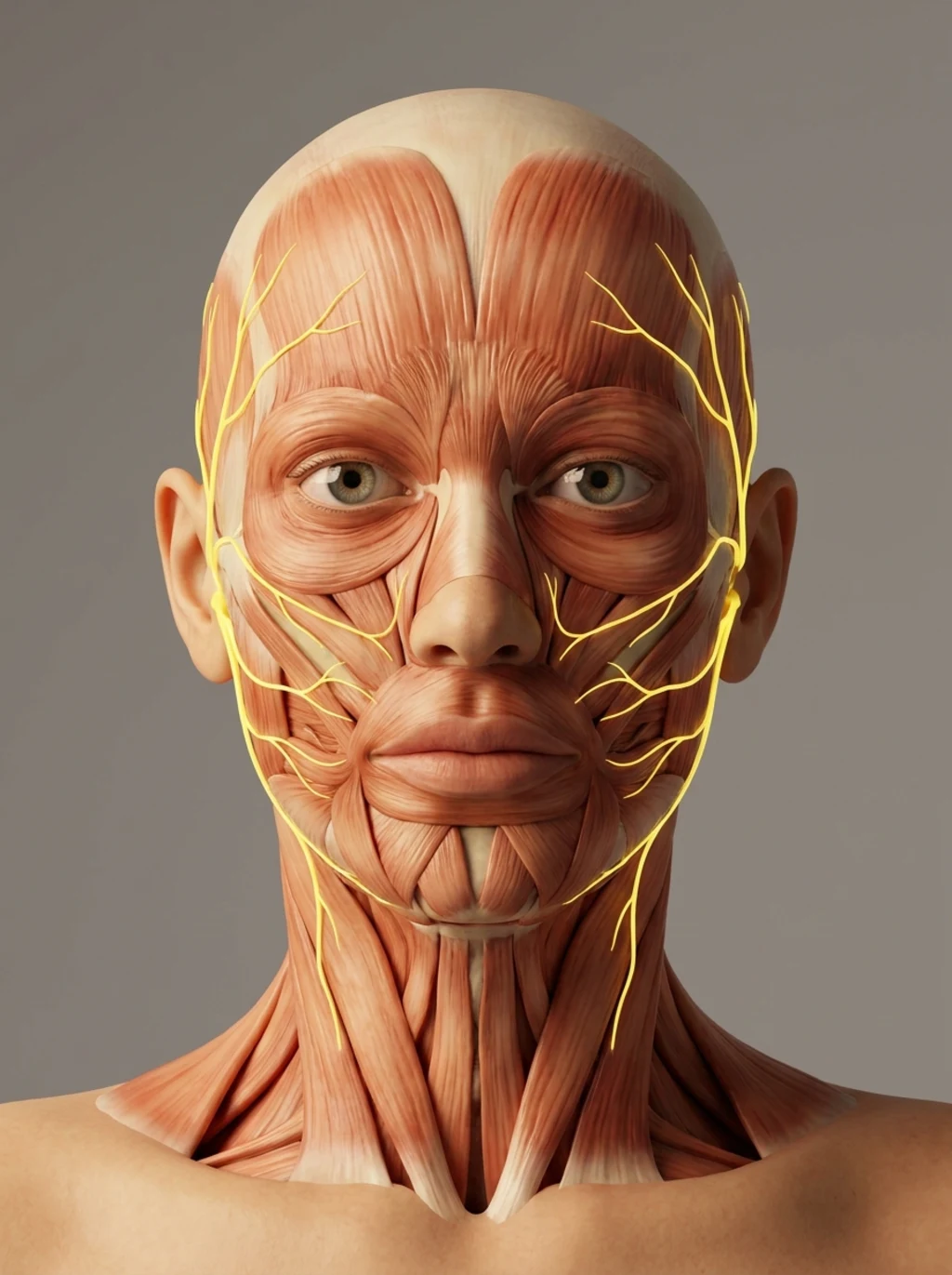
With facial palsy, the function of the facial nerve is impaired. As a result, one half of the face can be weaker or less mobile. Smiling, blinking, speaking and other mimic movements can change. Depending on severity, visible asymmetries and functional limitations can remain.
Facial palsy must be assessed medically. My support can then come in as a complement, provided nothing speaks against it from a medical or therapeutic point of view. The focus is on the existing mobility, the targeted activation of the muscles and an approach carefully tailored to the individual face.
My approach
FACE Method® and integral manual work, combined.
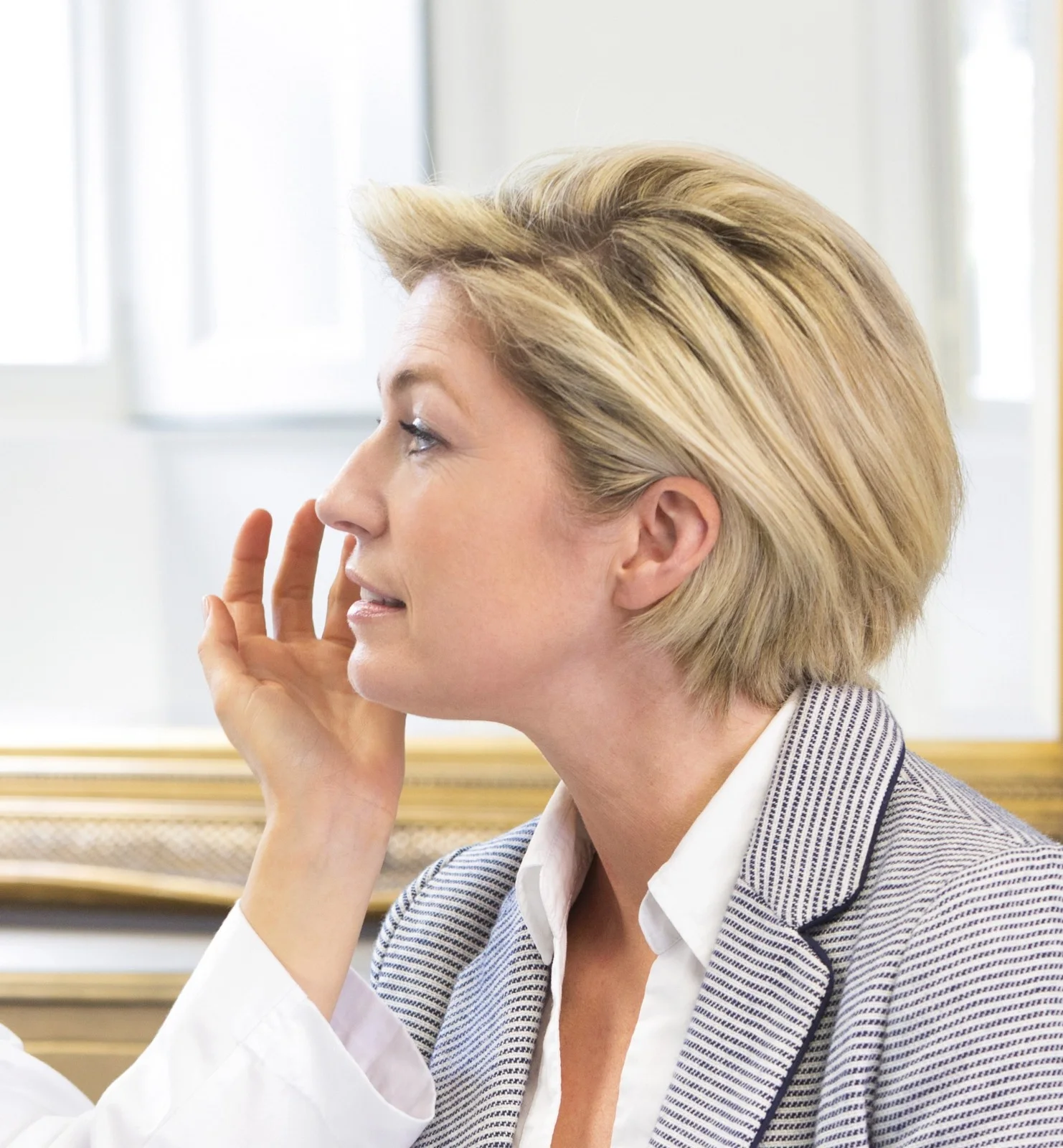
I combine the targeted training of the mimic muscles from the FACE Method® with integral manual work (IMT) on the face. Both as a complement, both tailored to you individually, after a personal analysis of the two halves of your face.
What is IMT?
IMT stands for Integral Manual Therapy. When tension or restricted mobility affects the facial muscles, I complement the active FACE training with selected manual techniques where needed. I adapt the application individually to your face and its functional conditions.
In depth
Does facial training help after facial palsy?
How does the personal support work?
It starts with a personal initial conversation. I ask you to describe how things have developed so far and look at which movements are present, where visible differences exist and which areas can be specifically activated.
Building on this, I put together an individual training from selected FACE exercises and complement it with manual techniques where useful. The exercises are explained personally, their execution is checked, and they are adjusted as you progress.
After medical assessment, the support can complement medical or therapeutic treatment, provided nothing speaks against it from a medical or therapeutic point of view.
What is Bell's palsy?
Bell's palsy is a sudden, usually one-sided facial palsy for which no clear cause is found. The diagnosis must be made by a doctor, since other possible causes have to be ruled out.
In many of those affected, the paralysis recedes largely or completely. In some, however, visible asymmetries, restricted mobility or unwanted accompanying movements remain. When such functional changes remain, my support can come in as a complement after medical assessment.
What role does the FACE Method® play with facial asymmetries?
With facial asymmetries, the whole face is always trained, but not each half of the face in the same way. I assess which areas should be specifically built up, activated more strongly or guided differently in their movement.
Already dominant areas are included in the training as well, but with a different objective and correspondingly adapted exercises. The result is an individually tailored training that takes both halves of the face into account and aims at a more balanced interplay of the muscles and more harmonious movement patterns.
How does the FACE Method® address remaining limitations?
After facial palsy, the mobility, strength and interplay of the facial muscles can remain changed. I work specifically with the areas that are less active, are harder to activate or have fallen out of balance in their interplay with the other half of the face.
The selected FACE exercises support the targeted activation and build-up of the muscles. At the same time, more active or dominant areas are also included in the training and guided differently. The whole face is always taken into account, and the training is adjusted step by step to the existing function.
Medical assessment and clear limits
Facial palsy must be assessed medically. The FACE Method® and the manual support do not replace medical or therapeutic treatment, but can be used as a complement once assessment has taken place.
I discuss with you personally whether and in what form support makes sense in your situation.
Personal inquiry
Talk to me about your situation.
Briefly describe what has changed in your face and whether a medical or therapeutic assessment has already taken place. I will get back to you personally and discuss with you whether and in what form support is possible.